
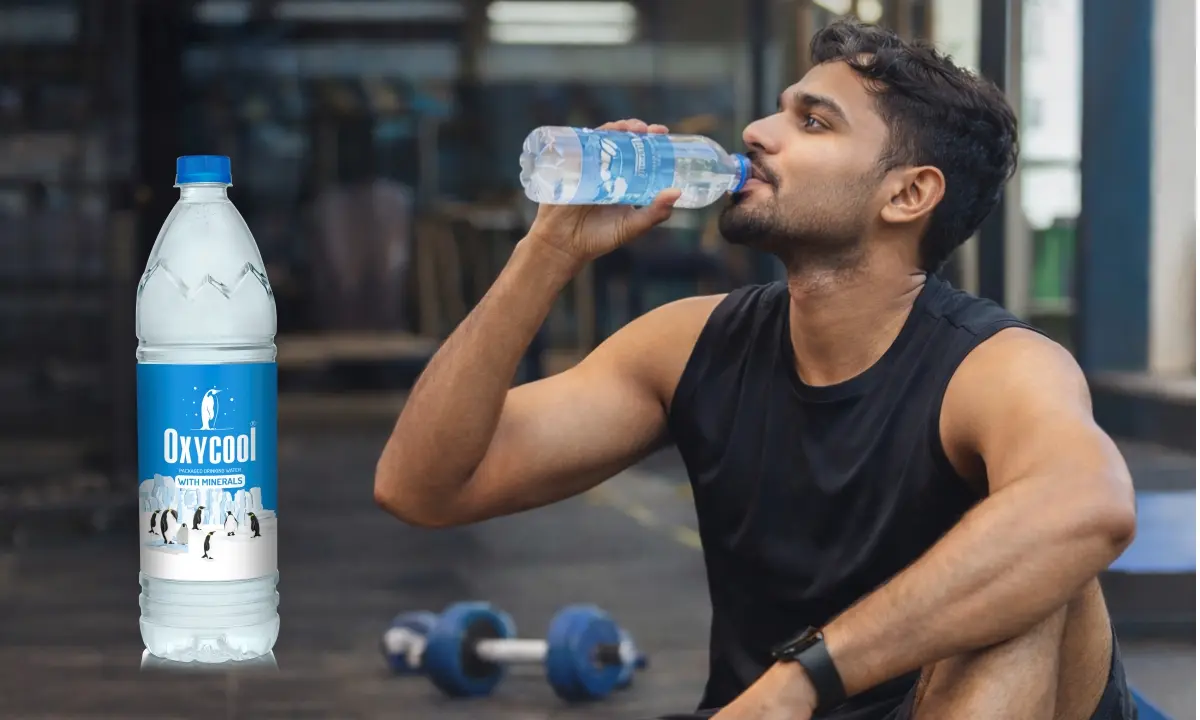
Hydration for gym and sports is the fastest performance upgrade most people ignore, and research is clear that even mild dehydration can hurt endurance. Reviews consistently report that hypohydration around 2% body mass can impair endurance performance, especially in warmer conditions.
This is your workout water strategy that works for Indian gyms, outdoor training, and sports sessions, without guesswork and without overdoing it.
Explore Oxycool Packaged Drinking Water Range
1) The baseline reality: you lose more water than you think
Sweat loss varies massively person to person. Research on athletes shows whole-body sweat rate typically ranges ~0.5 to ~2.0 L per hour, and can go higher in some cases.
That means a 60–90 minute workout can quietly cost you 0.5–2.0 litres of fluid, especially in Indian summer, crowded gyms, and outdoor sessions.
When hydration slips:
- perceived effort goes up
- heart rate drift increases
- you feel “gassed” earlier
- recovery feels slower
So the goal is simple: start hydrated, drink strategically, then replace losses.
2) Before workout hydration (pre-hydrate properly)
A strong session starts hours before the first set.
Research-backed starting point
The American College of Sports Medicine’s guidance is to begin hydrating several hours before exercise, and a commonly cited target is ~5–7 mL per kg body weight about 4 hours before exercise (and adjust based on urine output).
Practical translation:
- 60 kg person: ~300–420 mL
- 75 kg person: ~375–525 mL
- 90 kg person: ~450–630 mL
30 minutes before training
If you are walking into a hard session or sports match, top up with a few steady sips. Athletic guidelines commonly recommend a small pre-exercise drink closer to start time too.
Simple habit that sticks: keep Oxycool packaged drinking water in your bag and drink it during your commute or warm-up so you do not start the session already behind.
3) During workout hydration (sip, do not chug)
Most gym-goers do it wrong: they drink nothing for 40 minutes, then finish half a bottle in one go. That causes heaviness, not performance.
What research-based guidance looks like
A widely used sports guideline is 200–300 mL every 10–20 minutes, adjusted to sweat rate and sport breaks.
Another position statement notes that about 200 mL every 15–20 minutes may be ideal, though it is not always practical in every sport.
Practical translation for gym sessions:
- 2–4 sips every set break if you sweat a lot
- a larger sip every 10–15 minutes for longer cardio
- for 45–60 minutes strength training, many people land around 400–800 mL depending on heat and intensity
When plain water is enough vs when you need electrolytes
Plain water is usually enough when:
- your session is under 60 minutes
- you are not sweating heavily
- it is not extreme heat
Consider electrolytes when:
- it is a long session or match
- you are sweating heavily and getting cramps
- you have back-to-back training sessions
Key point: electrolytes are a tool for heavy sweat days, not something to overuse daily.
4) After workout hydration (recover properly, not randomly)
Your recovery depends on how well you replace what you lost.
The most useful metric: body weight change
Weigh yourself before and after a session (same clothes, towel off sweat).
If you are down 1 kg, you lost roughly 1 litre of fluid.
Sports guidance often advises drinking enough to cover losses, with many recommendations aiming for more than 100% replacement to account for ongoing urine loss.
Practical target:
- If you lost ~0.5 kg: drink ~0.6–0.8 L over the next couple of hours
- If you lost ~1.0 kg: drink ~1.2–1.5 L over the next couple of hours
Pair post-workout water with a normal meal. Food helps restore electrolytes naturally.
5) How to personalize your workout water strategy in 2 sessions
You do not need expensive testing. You need a repeatable method.
Step 1: Estimate your sweat rate
- Weigh before training
- Track how much you drank
- Weigh after training
- Sweat loss ≈ (weight loss in kg + drink volume in L)
This is the simplest way to stop guessing. It aligns with sports science approaches that highlight the wide variation in sweat rates.
Step 2: Create your “default plan”
- Low sweat day: small sips, mostly water
- High sweat day: more frequent sips, consider electrolytes
- Match day: drink early, sip at breaks, rehydrate steadily after
6) “Without overdoing it” and why too much water can also be a problem
Overhydration is less common than dehydration in gym settings, but it can happen if someone forces huge volumes of plain water for long durations without electrolytes.
Simple safety rule:
- Drink to a plan, not panic
- Sip steadily
- If you are doing long endurance or heavy sweating, include electrolytes rather than only plain water
If you have a medical condition affecting fluid balance, follow your clinician’s advice.
FAQs
1) How much water should I drink before a workout?
A solid starting point is hydrating a few hours before training, often around 5–7 mL per kg body weight about 4 hours before, then topping up with small sips closer to your session.
2) Should I drink water during strength training?
Yes, sip regularly. Even short breaks between sets are enough to keep steady intake without heaviness.
3) How do I know if dehydration is affecting my workout?
Early fatigue, headaches, dizziness, cramps, unusually high effort, and dark urine are common signs. Research also shows around 2% body mass dehydration can impair endurance performance.
4) When do I need electrolytes instead of plain water?
Use electrolytes on long sessions, heavy sweat days, hot outdoor training, or matches where you are losing a lot of fluid.
5) What’s the easiest gym hydration habit to start today?
Keep a sealed Oxycool bottled water in your gym bag and take steady sips throughout the session instead of drinking nothing and chugging later.


