
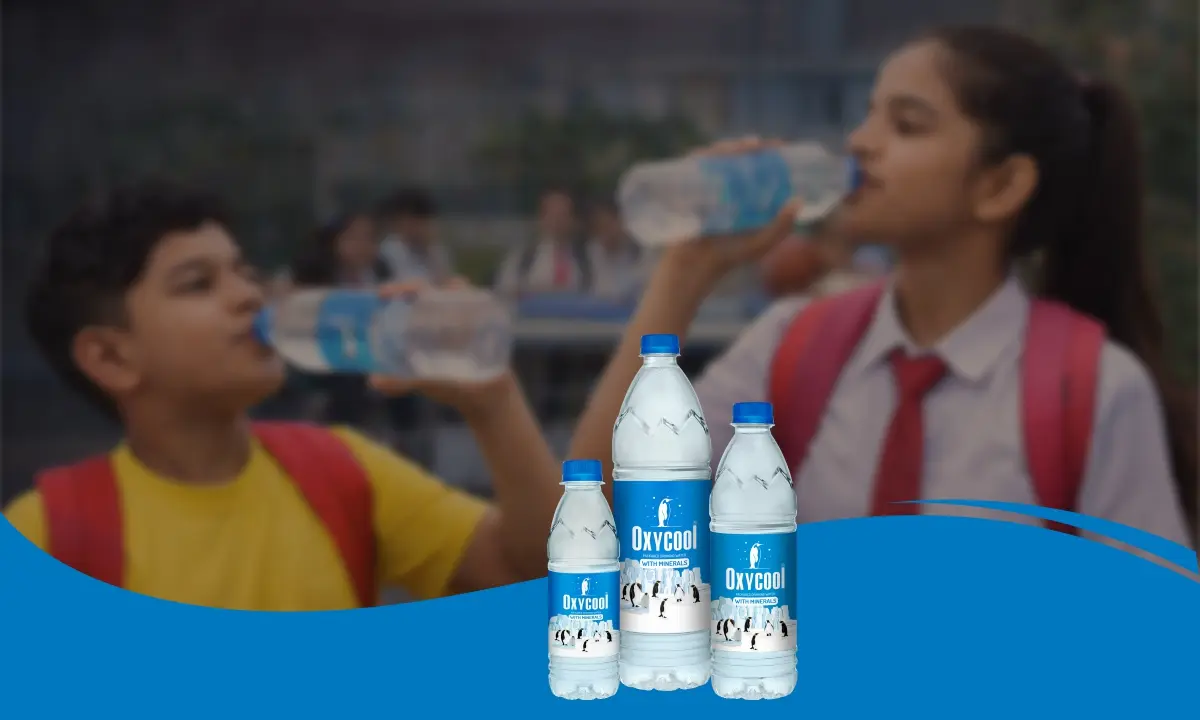
Hydration for kids and teens matters more than most parents realise because even mild dehydration can affect energy, focus, mood, and sports performance, especially in Indian heat and long school days. The good news is you do not need complicated rules. You need a clear daily target, a school routine, and safe access to drinking water like Oxycool packaged drinking water for classrooms, transport, sports, and events.
1) How much water do kids and teens need per day (age-wise)
If you are searching “how much water kids need” or “teen water intake”, use age bands instead of guesswork.
A practical reference many parents use is the American Academy of Pediatrics guidance that gives broad daily ranges by age:
- 5 to 8 years: about 16 to 40 fl oz
- 9 to 13 years: about 22 to 61 fl oz
- 14 to 18 years: about 29 to 88 fl oz
These ranges account for differences in body size, activity, weather, and food. That is why you see a wide band, not one number.
Another solid benchmark is EFSA’s adequate intake (total water from all sources), which is often summarised as:
- 4 to 8 years: 1.6 L/day
- Boys 9 to 13: 2.1 L/day, Girls 9 to 13: 1.9 L/day
- Boys 14 to 18: 2.5 L/day, Girls 14 to 18: 2.0 L/day
Simple takeaway for Indian school routines: set a realistic target, then build a school-day system that actually helps them drink it.
Visit About Oxycool: Since 2008
2) What counts as hydration (and what does not)
For school-going kids, the best baseline drink is plain water. The AAP also strongly frames water as one of the best drink choices for kids because it has zero calories and no added sugar, and supports overall health.
What parents should watch out for:
- Sugary juices and soft drinks are not hydration tools, they add sugar load.
- Sports drinks are usually not needed for regular school days. They are for long, heavy-sweat sports sessions.
This is where Oxycool packaged drinking water fits neatly. It keeps daily hydration simple and safe, especially when you want sealed, reliable water access for school, travel, and outdoor activities.
3) Signs of dehydration in kids and teens (school-friendly checklist)
Kids do not always say “I am thirsty”. Dehydration often shows up as behaviour and energy changes.
Common school-day signs:
- Headache after assembly or by afternoon
- Unusual fatigue, yawning, low energy
- Irritability, crankiness, mood swings
- Dry lips, dry mouth
- Dizziness after sports period
- Dark yellow urine, strong smell
- Constipation complaints
If this pattern repeats, fix the routine first: water with breakfast, water in the school bottle, water after recess, water after sports.
View Oxycool Distribution Network (Internal link: /distribution)
4) Easy school hydration routines that actually work
The secret is not telling them “drink more water”. The secret is attaching water to moments that already happen.
The 4-point school routine
- Before leaving home: 6 to 8 big sips
- After morning assembly or first period: a few sips
- After recess or lunch: a few sips
- After sports or activity: steady water, not chugging
For teens, add one more trigger:
- After using the washroom (one of the most reliable habits)
If the school can support it, keeping Oxycool bottled water for sports day, long events, school buses, and exam days reduces the chance of kids skipping water because the dispenser is far or the line is too long.
5) Hydration for school sports and coaching sessions
Hydration becomes even more important in sports because kids can overheat faster and may not recognise thirst early.
A practical sports hydration principle used widely is: do not wait for kids to ask for water, schedule water breaks.
For longer training sessions, paediatric sports sources often suggest structured drinking like small amounts at regular intervals rather than long gaps.
Simple sports-day plan for parents and coaches:
- Water before practice
- Small sips at breaks
- More water after practice, plus a normal meal
If your school runs tournaments, annual sports day, or inter-school matches, arranging Oxycool packaged drinking water in advance is a practical safety and logistics step, not just a convenience.
6) Smart tips parents can use without fighting daily battles
These are small changes that increase water intake without nagging.
- Choose a bottle they like: easy opening, easy sip
- Keep water visible: bottle on desk, not inside bag
- Flavour hack (home): a slice of lemon or orange, not sugary syrups
- Water first rule: water before milkshake, juice, or soda
- Pack watery foods: watermelon, cucumber, oranges when possible
For teens, add one truth: energy drinks are not hydration. They can increase jitters and reduce healthy routines.
7) Indian summer reality: exam season and heat season overlap
In India, dehydration spikes during:
- April to June heat
- exam schedules where breaks reduce
- long commutes and school transport
- outdoor tuition runs
That is exactly when parents prefer sealed water for predictability. Keeping Oxycool bottled water accessible in the school bag, family car, or school event stock reduces last-minute unsafe choices.
Contact us for more info on distribution networks!
8) The simple parent checklist (copy this into your phone)
- Kid drinks water before leaving home
- Bottle is filled and visible
- Water triggers: after assembly, after recess, after sports
- Watch for headache, fatigue, dark urine
- Extra water on sports days and high-heat days
- Plan sealed water for travel, picnics, tournaments
If you are a school admin, a coach, or an event coordinator, hydration becomes a system problem, not just a parent problem. Having a planned supply partner like Oxycool packaged drinking water helps you run events smoothly and safely.
FAQs
1) How much water should kids drink daily?
It depends on age, body size and activity. AAP ranges suggest 5 to 8 year olds around 16 to 40 fl oz, 9 to 13 around 22 to 61 fl oz, and 14 to 18 around 29 to 88 fl oz.
2) What are common dehydration signs in children at school?
Headaches, fatigue, irritability, dry lips, dizziness after sports, and dark urine are common. Fix the routine first with scheduled sips.
3) Is water better than juice for hydration?
Yes for daily hydration. AAP emphasises plain water as a best drink choice for kids because it has no added sugar and supports healthy habits.
4) Do kids need sports drinks for school sports?
Usually no for short sessions. For long, heavy-sweat sessions, structured hydration and electrolytes can help, but water is the base.
5) How can schools improve hydration easily?
Schedule water breaks, ensure easy access to safe drinking water, and keep sealed bottles ready for sports days and events, using a planned supply like Oxycool.


